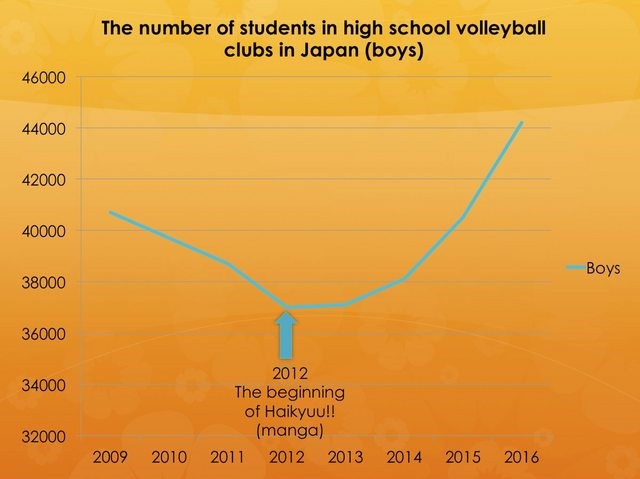
The world did not end in 2012, but if you were a fan of Japanese volleyball, things were certainly looking dire. For years, the number of students participating in the volleyball club across the nation had been shrinking, and that year alone, the sport lost 5% of its remaining players. But in 2013, something happened for the first time in ages, as more people joined the game than graduated out of it. The year after that even more came in, and in 2015 enrolment began to skyrocket. Two events precipitated these surges in the interests of the people. The first occurred on February 20th, 2012 when Haruichi Furudate’s volleyball manga Haikyuu stated serialization in Shounen jump. The second came on April 6th, 2014 when its anime began airing on television. Many mangas have been successful and influential, but few have had such a measurable and immediate impact on the real world. Haikyuu is inspiring and motivating in a very specific way that makes you want to get out of bed and go for a run, and so it did. It may have given the fallen powerhouse a new life.
It was 1960 – the volleyball world was ruled by teams with power and height. Countries like the Soviet Union and Brazil were dominating the sport with their raw power and techniques. The volleyball team of Japan lacked both the power and the height, but that did not stop them from dominating the sport. If they could not win by conventional means, they were willing to change the conventions, and so they did. Yasutaka Matsudaira, head coach of the Japanese volleyball team, was a master strategist and pioneer of the fast style (Asian style) offense, which is prevalent in the game today. His offense proved that ball control and a fast offense can dominate overpower and height. The Japanese team swept the floor with giants both figuratively and literally, winning them a silver medal in the 1968 Olympics and taking the gold home in the 1972 Summer Olympics. And at the same time, they also ended up as runner-up thrice in 1969, 1973, and 1977 in FIVB Volleyball World Cup. Yasutaka Matsudaira thus put Japan on the map in the volleyball world.
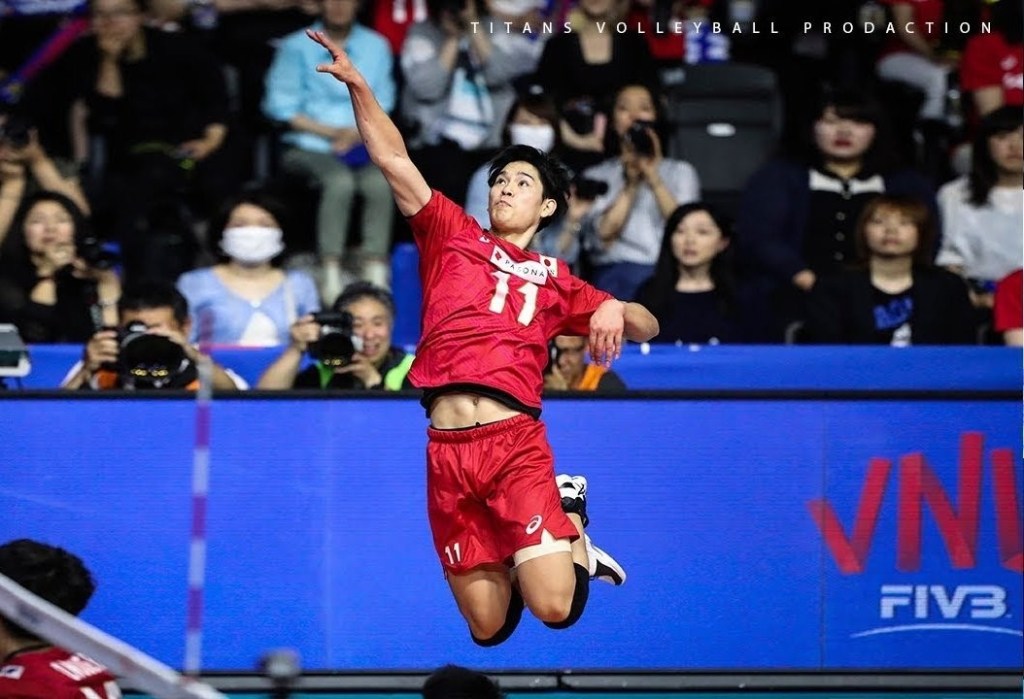
The times changed, and Japan lost its glory. In a few Olympic games, they could not even qualify for the tournament. The storm of volleyball that came to japan had passed, and the interest of people shifted to other sports like Soccer and Baseball. Glory was lost but not the hope. Increasing interest in Volleyball over recent years has given fans a future to hold on to. Japan ended the FIVB Volleyball World Cup in 4th position, a rank which was achieved after 28 years. The performance of Yuji Nishida in the 2019 world cup was truly prodigious as it broke the record by hitting 7 aces in a single game during a match against Bulgaria. The Japanese volleyball has given much to the nation, but they still have way more to promise.
Contributor : Arpit Barthwal

 THE SPORTS CLUB, IMI NEW DELHI